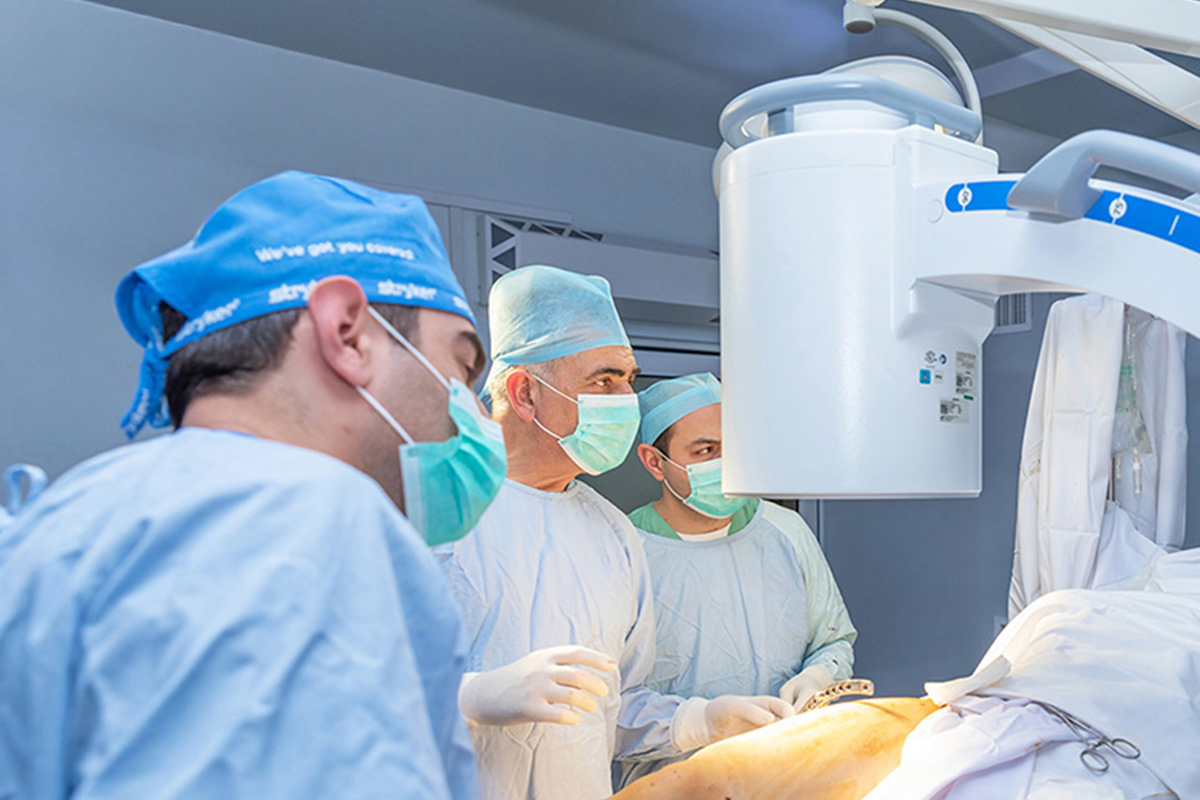

Reconstruction and extension of limbs
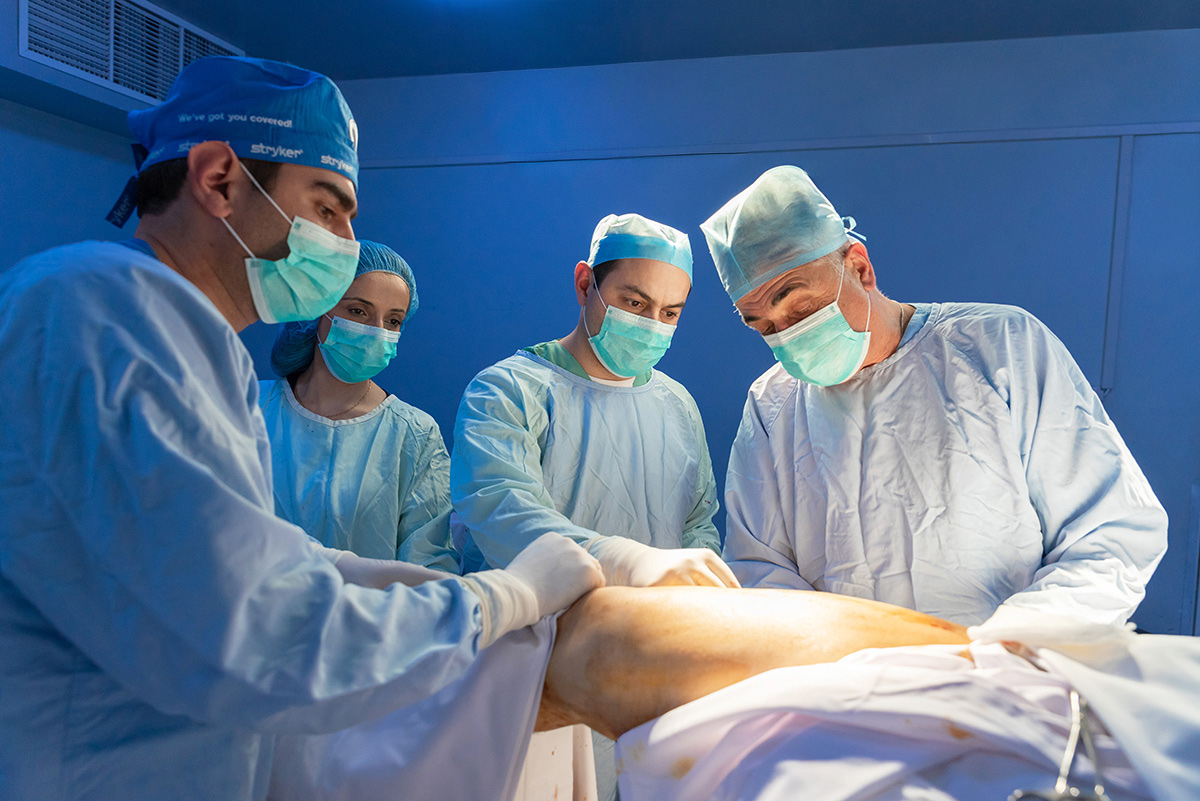
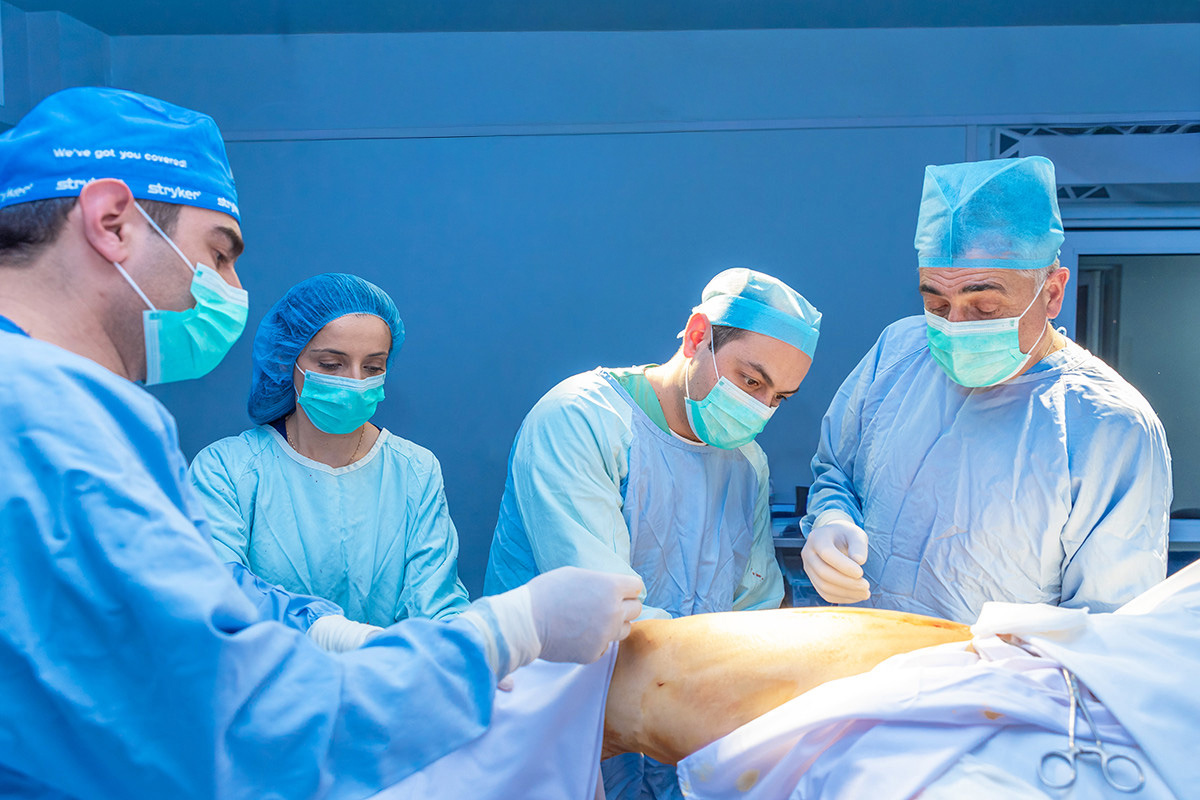
Specialized Services Offered
- Cross-lengthening of femur and tibia
- Lengthening with nail–fixator system
- Correction of leg deformities (treatment of “O”-shaped and “X”-shaped bowing)
- Correction of various foot deformities
- Therapeutic exercise
- Additional supportive services
Indications for Surgical Leg Lengthening
- The patient’s natural growth must be completed.
- The ultimate goal of lengthening should be proper proportionality of the tibia and femur, as well as harmony between trunk and limbs.
- For initial assessment, surgical indications, and treatment planning, patients must send photographs in underwear or equivalent clothing (face can remain covered if preferred).
- Patients seeking aesthetic height increase should be physically healthy, non-smokers, and undergo psychological evaluation to confirm adequacy and motivation.
Surgical Techniques
Correction of O-shaped deformity (genu varum):
In true genu varum, caused by curvature of the tibia, corrective osteotomy with the creation of an open wedge regenerate and slight medial shift is indicated. This not only restores leg shape but may also increase height by up to 2.5 cm.
In false genu varum, where the tibial axis is straight and deformity is due to soft tissues, silicone implants are recommended.
Correction of X-shaped deformity (genu valgum):
The method is similar to O-shaped correction, with the difference being the direction of the wedge (opened medially).
Simultaneous bilateral tibial lengthening from one level (1 mm per day):
Indicated for femur/tibia disproportions (short tibia with relatively long femur).
Simultaneous bilateral tibial lengthening from two levels per tibia (2 mm per day):
Recommended for patients with limited time, as total treatment duration is reduced by up to 30%.
Cross-lengthening of femur and tibia:
Indicated for increasing height by more than 6–7 cm. This is performed in two stages:
- Stage 1: Tibial lengthening and contralateral femoral lengthening
- Rehabilitation interval of 1–3 months to restore mobility (minimum 90° knee flexion and 90° ankle dorsiflexion)
- Stage 2: Lengthening of the opposite tibia and femur in the same manner
Lengthening with nail–fixator system:
An intramedullary nail is combined with two external half-rings. Once the segment reaches the planned length and X-ray monitoring confirms bone consolidation, a second surgery is performed: blocking screws are inserted, and the external fixators are removed. The main advantage is a significantly reduced period of wearing external fixation devices.
List of diseases
Bow-legged deformity
Knock-kneed deformity
Disproportionate lower limbs
Short stature
Congenital and acquired orthopedic problems
Deviations in shape and proportion of the lower limbs
Foot deformities
Both tibias simultaneous lengthening
Cross-lateral tibia-femur lengthening
Lengthening over the nail (LON)
Lengthening and then nailing (LATN)
Treatment of Hallux-Valgus; solution for various feet esthetic problems
Solution of various orthopedic problems: limb length discrepancy (LLD), nonunion, malunion, etc.