

General Surgery
General surgery covers the diagnosis and treatment of diseases affecting the abdominal cavity and digestive organs, hernias, skin and soft tissues, as well as a number of acute surgical conditions. Procedures may be elective or emergency, open or minimally invasive, including laparoscopic and endoscopic techniques.
At Nairi Medical Center, the General Surgery Service is organized into two separate departments. Operations are performed on the gallbladder, stomach, intestines, liver, pancreas, spleen, and other abdominal organs, along with the treatment of hernias and complex combined surgical conditions.
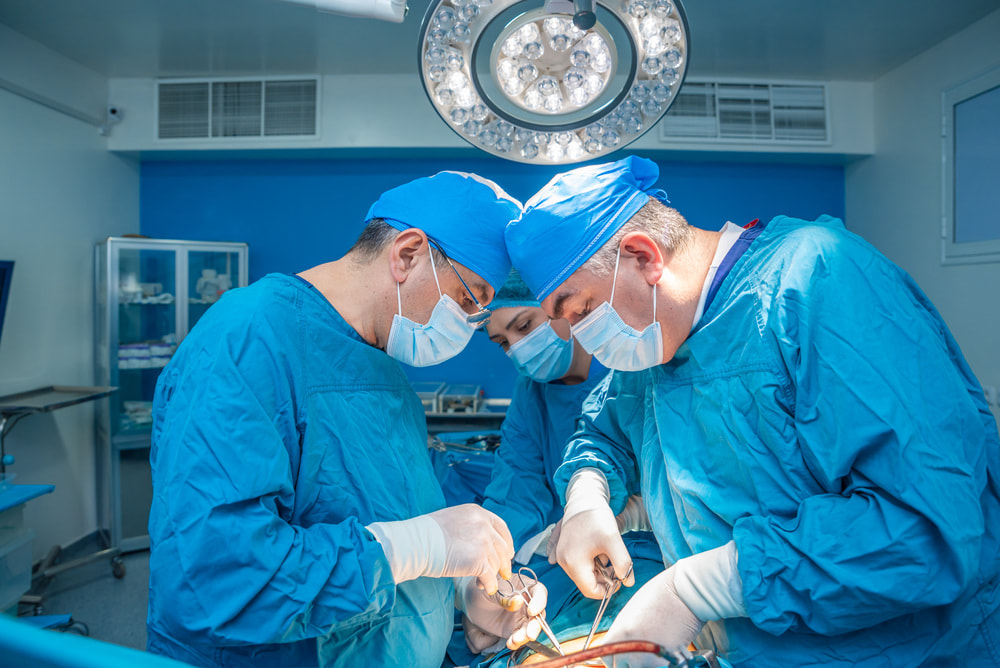
A general surgeon is a specialist who diagnoses surgical diseases, assesses whether surgery is required, performs surgical treatment, and provides postoperative follow-up.
The main areas of general surgery include the digestive system, abdominal organs, hernias, skin, and soft tissues. General surgeons also manage a range of acute conditions such as appendicitis, intestinal obstruction, intra-abdominal bleeding, and peritonitis.
A general surgeon should also be distinguished from surgeons with narrower subspecialties. Vascular surgeons mainly treat diseases of the arteries, veins, and lymphatic system; thoracic surgeons treat surgical diseases of the chest organs; and maxillofacial surgeons manage conditions affecting the face, jaws, and related structures.
Surgical departments at Nairi Medical Center
At Nairi Medical Center, general surgery is represented by two surgical departments.
- Department of General and Laparoscopic Surgery No. 1 - headed by surgeon and professor Andranik I. Adamyan. Laparoscopic surgery is one of the department’s major areas of practice. Procedures include laparoscopic pancreaticoduodenal and distal pancreatic resections, gastric resections, colorectal and rectal surgery, splenectomy, and laparoscopic hernia repair.
- Department of General and Endoscopic Surgery No. 2 - headed by surgeon Samvel Ch. Zakaryan. The department performs laparoscopic cholecystectomy, appendectomy, hernia surgery, colorectal surgery, and bariatric surgery.
What operations are performed within general surgery?
General surgery includes both common procedures and complex operations on the organs of the abdominal cavity and retroperitoneal space.
Surgical treatment includes diseases of the stomach, liver, gallbladder and bile ducts, pancreas, small and large intestine, rectum, spleen, and other organs.
Surgery of the abdominal organs
Gallbladder and bile ducts
Gallstone disease, acute or chronic cholecystitis, and certain complications may require removal of the gallbladder, known as cholecystectomy. In many cases, this can be performed laparoscopically.
Nairi Medical Center also treats choledocholithiasis, or stones in the common bile duct, bile duct strictures, and tumor-related lesions, with reconstructive bile duct surgery when necessary.
Appendicitis and other emergency conditions
Acute appendicitis is one of the most common surgical emergencies. Appendectomy may be performed laparoscopically or through an open approach depending on the clinical situation.
Nairi Medical Center also provides surgical treatment for intestinal obstruction, peritonitis, intra-abdominal bleeding, perforation, and other acute abdominal conditions.
Hernias
General surgeons treat various types of abdominal wall hernias surgically. These include inguinal, anterior abdominal wall, and postoperative incisional hernias.
Hiatal hernias form a separate group. In these cases, part of the stomach may move upward toward the chest through the esophageal opening of the diaphragm. These hernias can also be treated laparoscopically.
Nairi Medical Center performs both open and laparoscopic hernia repairs, including procedures using mesh prostheses.
Stomach and duodenum
Surgical treatment may be required for complications of gastric or duodenal ulcers, bleeding, perforation, narrowing, or tumors.
Nairi Medical Center also performs laparoscopic gastric resections and more extensive procedures involving the stomach and esophagus.
Small and large intestine
Bowel surgery may be required for obstruction, tumors, inflammatory diseases, perforation, or damage to a segment of the intestine.
At Nairi Medical Center, procedures include small-bowel resections with anastomosis to restore intestinal continuity, colon and rectal resections, and laparoscopic colorectal surgery.
Liver
Liver surgery includes resections of varying extent as well as treatment of cysts.
Nairi Medical Center performs liver resections and surgical removal of echinococcal cysts in different locations within the liver. Some procedures can be performed laparoscopically.
Pancreas
Pancreatic surgery may be required for cysts, complications of pancreatitis, pancreatic necrosis, and benign or malignant tumors.
The center performs distal and proximal pancreatic resections.
Spleen
Spleen surgery may be required for certain tumors, cysts, hematologic diseases, injuries, or other lesions. Nairi Medical Center also performs laparoscopic procedures on the spleen.
Outpatient and purulent surgery
General surgery also includes smaller procedures that, in appropriate cases, can be performed under local anesthesia without prolonged hospitalization. These may include removal of superficial soft-tissue lesions, biopsies, and other minor procedures.
The main goal of purulent surgery is timely identification of an infected or pus-containing focus and, when necessary, opening and drainage. Such conditions may include abscesses, infected wounds, and other localized purulent processes.
Conditions treated at Nairi Medical Center include intra-abdominal abscesses, peritonitis, acute paraproctitis, and purulent lesions of the sacrococcygeal region. The center’s CT service also performs CT-guided interventional procedures, including drainage.
Laparoscopic vs open surgery: what is the difference?
During laparoscopic surgery, several small incisions are made in the abdominal wall instead of one large incision. A camera, or laparoscope, is inserted through one incision and surgical instruments through the others.
During open surgery, the surgeon reaches the organ through a larger incision.
For many procedures, laparoscopic surgery is associated with smaller wounds, less postoperative pain, smaller scars, shorter hospital stays, and a faster return to daily activities.
However, laparoscopy is not always possible or safe. Open surgery may be required in cases of extensive disease, significant adhesions, bleeding that is difficult to control, complex anatomy, or another condition identified during surgery. When necessary, a procedure that begins laparoscopically may be converted to an open operation to ensure patient safety.
General surgery methods at Nairi Medical Center
Nairi Medical Center uses open, laparoscopic, and endoscopic surgical techniques within general surgery. Laparoscopic procedures include not only common operations but also complex interventions involving the pancreas, stomach, intestines, and spleen.
For some conditions, surgical treatment is combined with endoscopic procedures. For certain rectal tumors, the center also performs combined laparoscopic and transanal operations.
Diagnosis before surgery
To determine the appropriate type of operation, it is important to assess the location and extent of the disease, the condition of adjacent organs, and possible complications.
At Nairi Medical Center, general surgery patients can undergo laboratory tests, ultrasound, gastroscopy, colonoscopy, computed tomography, and MRI.
Combined surgery
Complex diseases may sometimes involve several organs at the same time. In such cases, surgery may require the participation of physicians from different specialties.
At Nairi Medical Center, general surgeons work together with urologists, gynecologists, and gynecologic oncologists during complex combined procedures. The center also performs simultaneous or staged combined operations, including procedures involving laparoscopic nephrectomy and adrenalectomy.
For oncological diseases, oncologists, radiologists, and anesthesiologist-intensivists may also be involved in treatment planning.
Why choose the General Surgery Service at Nairi Medical Center?
At Nairi Medical Center, general surgery is organized into two departments: the Department of General and Laparoscopic Surgery No. 1, headed by Andranik Israely Adamyan, and the Department of General and Endoscopic Surgery No. 2, headed by Samvel Chubari Zakaryan.
The center performs both open and minimally invasive operations, including complex laparoscopic procedures involving the pancreas, stomach, intestines, and spleen.
Diagnostic services include ultrasound, endoscopy, CT, including contrast-enhanced CT, and MRI. In complex cases, specialists from different surgical fields can work together. Postoperative wards provide monitoring of respiration, blood pressure, heart rate, and ECG.
Nairi Medical Center also holds international accreditation from Joint Commission International - JCI.
To book an appointment, call 89 00 or visit Nairi Medical Center at 21 Paronyan Street.
Doctors


Frequently Asked Questions
Bring any available medical documents, including laboratory test results, ultrasound, CT or MRI reports, endoscopy results, and a list of medications you are currently taking.
Yes. Preoperative tests are selected according to the type of surgery and anesthesia and may include blood tests, coagulation assessment, ECG, and other examinations.
Yes, after some minor or minimally invasive procedures. More extensive or complex abdominal surgery requires inpatient observation, and the length of stay depends on the procedure and the patient’s recovery.
Yes. As part of its medical tourism services, Nairi Medical Center accepts international patients and arranges consultations, diagnostic examinations, and treatment.
No. A surgical consultation requires an in-person visit so that the physician can perform an examination and review the available test results.
Author:
Updated:
02 November 2026, 12:27Our certificates



List of services
- ▸ Mammoplasty
- ▸ Liposuction
- ▸ Bariatric Surgery (Stomach Reduction)
- ▸ Glaucoma Treatment
- ▸ Strabismus Correction
- ▸ Venous system surgery, lymphology
- ▸ Vascular and Endovascular Surgery
- ▸ Aesthetic and plastic surgery
- ▸ General Surgery
- ▸ Thoracic Surgery
- ▸ Orthopedic oncology
- ▸ Head and neck surgery
- ▸ Spleen Removal Surgery
- ▸ Surgery for Benign Prostatic Hyperplasia
- ▸ Breast Augmentation
- ▸ Breast Reduction


