

Plasmapheresis
Plasmapheresis is a method of extracorporeal blood processing in which plasma is separated from the blood, while the formed elements are returned to the body. It is used in certain autoimmune, neurological, hematological, and other diseases according to medical indications, when it is necessary to remove pathological components circulating in the blood plasma.
Plasmapheresis may be indicated only after a physician’s assessment, taking into account the patient’s complaints, disease, overall condition, coexisting problems, and examination results. The scope and frequency of the procedure are determined individually.
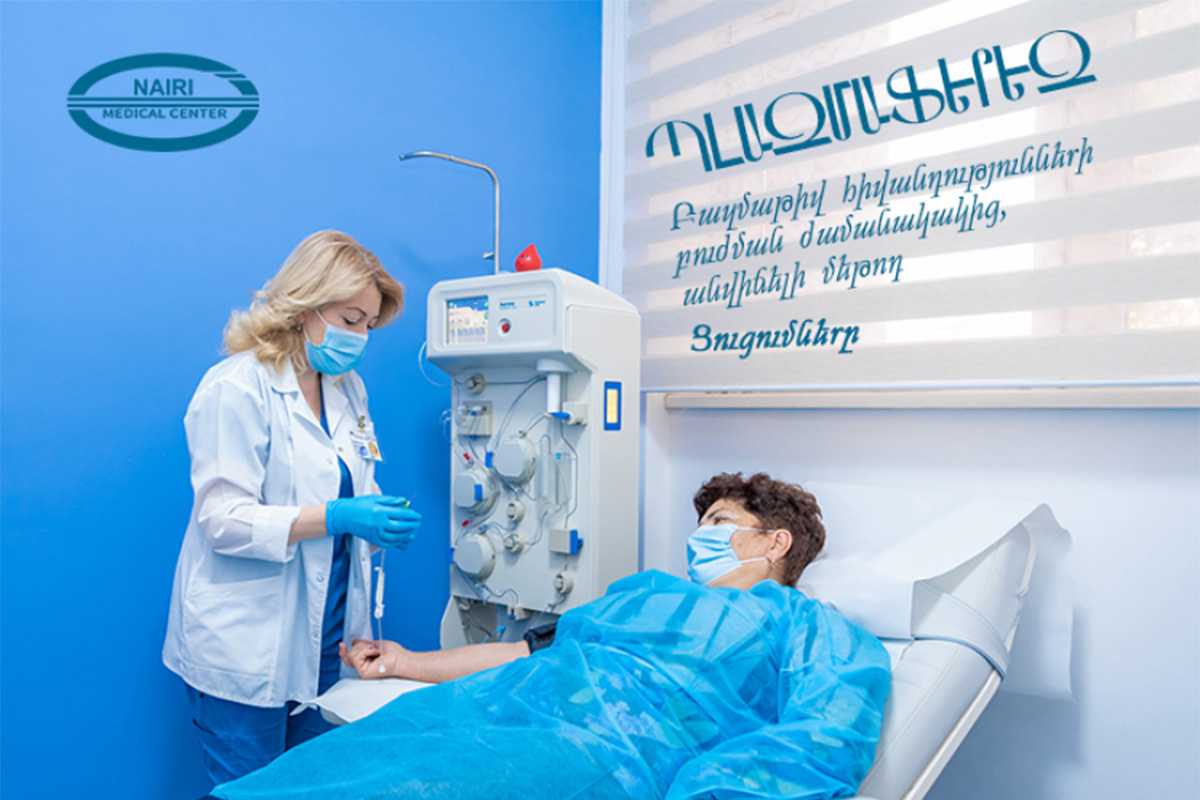
"Nairi" medical center has a medical plasmapheresis service, which is performed on the outpatient basis. Plasmapheresis is a modern, indisputable method of treating many diseases, based on the rapid removal of metabolic products, various toxins, allergens and other pathological compounds from the blood. The event is carried out with the help of the latest generation machine of Fresenius company, which ensures maximum safety for the patients. Therapeutic plasmapheresis prevents the possible complications of a number of diseases as well as their transition to a chronic nature. The effectiveness of the treatment is observed after 15-20 days.
The indications for the plasmapheresis are:
- Autoimmune diseases (rheumatoid arthritis, systemic lupus erythematosus, scleroderma)
- Skin diseases (psoriasis, neurodermatitis, furunculosis, "problematic skin")
- Arthritis of various origins
- Nervous system diseases (polyneuropathy, Guillain-Barré syndrome, multiple sclerosis, post - viral neuritis, myasthenia gravis)
- Gastrointestinal diseases (hepatitis of various origins, cholecystitis)
- Cardiovascular diseases (rheumatism, atherosclerosis, hypercholesterolemia)
- Endocrine diseases and Metabolic disorders (autoimmune thyroiditis, Diabetes Mellitus)
- Lipid metabolism disorders
- Prevention of atherosclerosis
- Acute and chronic poisonings (toxicomania, tobacco addiction, food poisoning)
- Drug addiction and alcoholism ( by removing consequences of alcohol breakdown, drugs, psychotropic substances, toxins, peroxidized substances from the body, plasmapheresis reduces their toxic effect on the liver, kidneys, spleen, increases body's resistance to external stimuli, reduces the duration of inpatient treatment of the patient, repairs immunological disorders, stimulates metabolism and the immune system, improves microcirculation in tissues and oxygen metabolism.
- Allergic conditions (atopic dermatitis, urticaria, Quincke's edema, bronchial asthma, vasomotor rhinitis, food intolerance)
- Urogenital infections (chlamydia, mycoplasma, herpes, cytomegalovirus)
- Menopausal syndrome
- Toxicity during pregnancy, HLA incompatibility, Rhesus conflict, Antiphospholipid syndrome, Preparation for insemination or in vitro fertilization
- After some conditions like burns, severe injuries, alcohol poisonings, chemotherapy, prolonged antimicrobial treatment
- To avoid the consequences of chemotherapy and radiation treatment
- Bronchial asthma
- Chronic Fatigue Syndrome
- Septic conditions
- Goodpasture syndrome (systemic inflammation of the capillaries with lung and kidney affection)
- intravascular specious coagulation syndrome
It must be taken into account that one treatment session is not enough and should be performed at least three times, because:
- The first stage is designed to remove toxins that are freely circulating in the blood
- The second session removes toxins "hanging" in the intercellular fluid,
- The third session ensures the removal of the harmful substances directly from the cells.
- Plasmapheresis is performed after the consultation with a specialist, under the supervision of the physician who monitors the patient during the procedure.
Frequently Asked Questions
The number of plasmapheresis procedures depends on the underlying disease, its severity, the treatment goal, and the patient’s overall condition. In some cases, a few procedures are sufficient, while in others a staged or course-based approach may be required.
Plasmapheresis is generally not considered a painful procedure, although some people may experience weakness, a feeling of cold, or short-term discomfort, all of which are assessed and monitored by medical staff.
The possibility of using plasmapheresis in children is determined only under strict medical indications and after evaluation by an appropriate specialist. The need for such a procedure depends on the nature of the disease, the child’s age, overall condition, and treatment goals.
The scope of testing before plasmapheresis is determined by the physician. Usually, a complete blood count, biochemical tests, coagulation parameters, blood group, and other data may be required depending on the clinical situation.
After plasmapheresis, it is recommended to avoid heavy physical exertion, overfatigue, and factors that may worsen well-being. After the procedure, the patient should follow the physician’s instructions and adhere to recommendations regarding fluid intake and rest. If weakness, dizziness, or other complaints occur, medical staff should be informed.
Plasmapheresis may be used in certain allergic and immunological conditions, but it is not indicated for all allergic diseases.
Plasmapheresis may be used in certain cases of multiple sclerosis, especially in situations where a specific therapeutic intervention is required and there is an appropriate medical indication.
The presence of diabetes mellitus does not always in itself exclude plasmapheresis, but in such cases the patient’s overall condition, coexisting complications, and treatment risks must be carefully assessed. The decision is made individually by the physician.
In some cases, the procedure may be performed on an outpatient basis, while in others hospitalization or closer monitoring may be required. This is determined by the physician based on the clinical situation.
Like any medical intervention, plasmapheresis may have limitations and risks. These may be related to changes in blood pressure, weakness, coagulation changes, allergic reactions, or problems associated with venous access.
Contraindications to plasmapheresis depend on the patient’s overall condition, the primary and coexisting diseases, as well as laboratory findings. In some cases, the procedure may be temporarily or completely contraindicated.
Author:

Updated:
22 December 2025, 18:00Our certificates



List of services
- ▸ Thyroid Tests
- ▸ Cardiac Holter Monitoring
- ▸ Plasmapheresis
- ▸ “Longevity Nairi”
- ▸ Laboratory Diagnosis
- ▸ Computed Tomography
- ▸ Magnetic Resonance Imaging
- ▸ Mammography
- ▸ X-Ray Diagnostics
- ▸ Ultrasound Diagnostics
- ▸ Endoscopic Diagnosis
- ▸ Functional diagnostics
- ▸ Electroneuromyography (ENMG)
- ▸ Electroencephalography (EEG)
- ▸ Vascular Ultrasound or Duplex Scan
- ▸ Kidney CT Scan
- ▸ Ultrasound (US) of the Lower Limbs
- ▸ Lymph Node Ultrasound (USG)
- ▸ CT Scan of the Heart
- ▸ CT Scan of the Liver
- ▸ Breast Ultrasound
- ▸ Pelvic Ultrasound
- ▸ Thyroid ultrasound
- ▸ Kidney Ultrasound
- ▸ Liver Ultrasound
- ▸ Ultrasound of the ovaries
- ▸ Ultrasound of the heart
- ▸ Abdominal ultrasound
- ▸ Ultrasound during pregnancy
- ▸ CT of paranasal sinuses
- ▸ Computed tomography of the chest
- ▸ Head/brain computed tomography
- ▸ Abdominal computed tomography
- ▸ Spinal MRI
- ▸ Joint MRI
- ▸ Brain MRI


