Endocrinology
An endocrinologist specializes in the diagnosis, treatment, and monitoring of disorders affecting the endocrine glands and hormonal system. An endocrinology consultation may be indicated for thyroid disorders, diabetes, changes in body weight, metabolic disorders, certain menstrual irregularities, hair loss, and other hormonal conditions.
At Nairi Medical Center, endocrinology consultations, hormonal assessment, and the necessary laboratory and instrumental examinations are available.

 The service uses modern laboratory examinations of endocrine glands (fat-carbohydrate metabolism, high-sensitivity methods for determining the density of hormones) and instrumental examinations (ultrasound, X-ray, scintigraphy, fine needle aspiration biopsy, densitometry, CT( computed tomography), MRI (magnetic resonance imaging).
As part of the endocrine service, both conservative (medical) and surgical treatment of the following organs is performed:
- pancreas
- liver
- pituitary gland
- adrenals,
- gonads
- thyroid gland,
- parotid gland,
- thyroid gland, etc.

Specialists prefer minimally invasive organ-conservative surgery, video-endoscopic surgeries, and ultrasound-controlled interventions.
Endocrine Service cooperates with leading clinics in Russia and Europe.
Partners
- Anton Luger, MD, Professor of Medicine, Head of Division of Endocrinology and Metabolism, Department of Medicine III, Medical University of Vienna, General Hospital of Vienna, Vienna, Austria,
- Maria Grazia Castagna- Professor of Medicine, Head of Division of Endocrinology and Metabolism, University Hospital of Siena, Italy,
- Gabriele Materazzi, Alexandr Aghababyan - University Hospital of Pisa, Italy,
- European Thyroid Association (ETA),
- European Association for the Study of Diabetes (EASD),
- Lyudmila Yakov Rozhinskaya, PhD, Professor, Chief Researcher, Department of Neuroendocrinology, Osteopathy, Federal State Budget Institution, Endocrinology Research Center, Ministry of Health of the Russian Federation,
- Tatyana Leonid Karonova, PhD, Head of the Clinical Endocrinology Research Laboratory, V.A. Academician of the Northwestern Federal Medical Research Center after Almazov, Academician of the Federal State Budget Institution, I.P. Professor of the Department of Faculty Therapy at the First Pavlov State Medical University of St. Petersburg,
- Russian Academy of Medical Sciences.
List of diseases
Vitamin D3 deficiency
Reproductive disorders
Obesity
1st and 2nd type diabetes
Ectopic ASD syndrome
Benign and malignancies of the endocrine system (multiple endocrine neoplasms (MEN) syndrome)
Thyroid diseases
Diseases of the thyroid gland
Diseases of the hypothalamic-pituitary system
Kidney diseases
Osteoporosis
Doctors



News
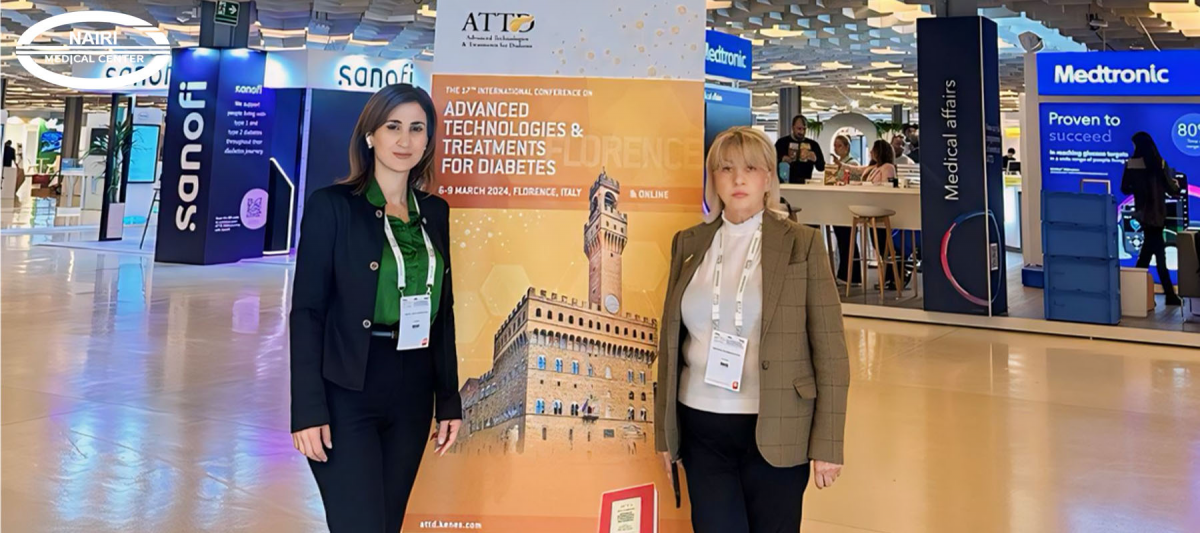
Nair MC actively participates in international conferences
The general director of Nairi Medical Center Narine Mamikonyan, and the deputy director, endocrinologist Nona Martirosyan, participated in the international "Innovative Technologies and the Latest Treatment Approaches in Diabetology" conference in Florence.
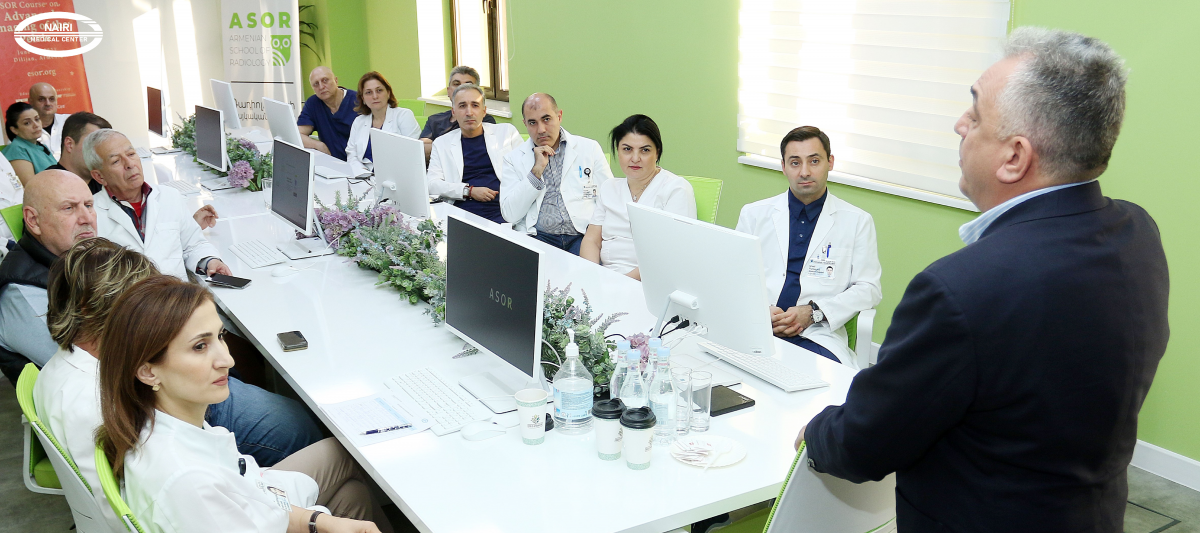
The process of implementing the international quality management standard ISO 9001:2015 continues at Nairi MC
Within the framework of the ISO 9001:2015 international quality management standard implementation and of the prestigious Joint Commission International (JCI) accreditation, we continue staff training courses in cooperation with our partners from the European "Management Mix" company.



Frequently Asked Questions
During the appointment, the endocrinologist assesses the patient’s symptoms, medical history, changes in body weight and metabolism, and possible signs of hormonal disorders. The evaluation may include the condition of the thyroid gland, changes in the skin and hair, blood pressure, glucose regulation, and other relevant parameters.
To book an appointment with an endocrinologist, call 89 00 or visit Nairi Medical Center at 21 Paronyan Street, Yerevan. If you have previous test results, hormone tests, ultrasound reports, or other medical documents, it is advisable to bring them with you.
The same set of tests is not required for every patient. Depending on the symptoms, useful tests may include blood glucose, glycated hemoglobin, TSH, free T4, insulin, and other thyroid or hormone-related tests. The appropriate list of investigations should be determined based on the patient’s symptoms, coexisting conditions, and medical history.
Pediatric endocrinology consultations are not provided at Nairi Medical Center.
Yes. An endocrinologist diagnoses, treats, and monitors a range of thyroid disorders, including hypothyroidism, hyperthyroidism, autoimmune thyroiditis, thyroid nodules, and other thyroid function disorders. The treatment and follow-up plan is determined based on laboratory results, ultrasound findings, and the overall clinical picture.
Author:

Updated:
20 October 2025, 20:08Our certificates


List of services
- ▸ Audiology and Otoneurology
- ▸ Emergency Medical Aid
- ▸ Allergology
- ▸ Ophthalmology
- ▸ Anesthesia, Intensive Care, Resuscitation
- ▸ Gastroenterology and Endoscopy
- ▸ Gynecology and Women's Health
- ▸ Endocrinology
- ▸ Therapy
- ▸ Pulmonologist
- ▸ Pediatrics
- ▸ Dermatology
- ▸ Oncology and Chemotherapy
- ▸ Urology
- ▸ Rheumatology
- ▸ Dentistry
- ▸ Cardiology
- ▸ ENT and Audiology
- ▸ Rehabilitation medicine
- ▸ Proctology
- ▸ Pancreatitis Treatment
- ▸ Orthopedics Traumatology


