

Surgery for Benign Prostatic Hyperplasia
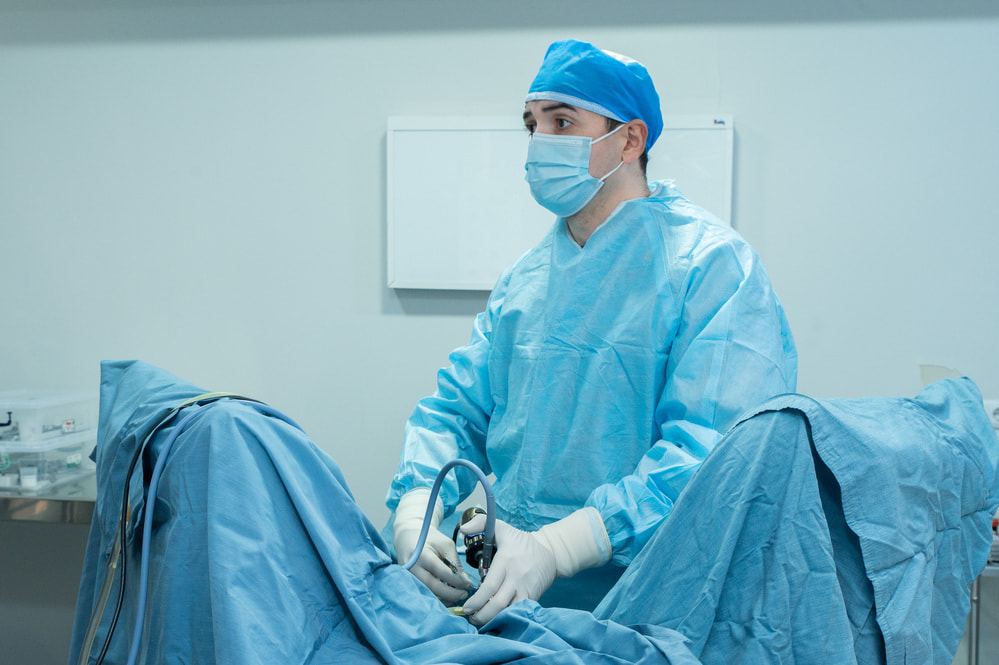
Benign prostatic hyperplasia, also known as an enlarged prostate, is a common age-related condition in which the enlarged prostate can compress the urethra and interfere with the normal flow of urine. This may lead to a weak urinary stream, frequent urination, nighttime urination, a feeling of incomplete bladder emptying, or urinary retention.
If medication does not provide sufficient relief or complications have already developed, surgery for benign prostatic hyperplasia may be required. The aim of surgery is to remove the tissue compressing the urethra and restore the normal flow of urine.
When is surgery for benign prostatic hyperplasia necessary?
Not every man with benign prostatic hyperplasia requires surgery. In cases of mild or moderate symptoms, observation or medical treatment may often be appropriate initially.
Surgery is considered when urinary symptoms are significant or persist despite treatment. Surgical treatment may also be necessary in the following situations:
- recurrent or persistent urinary retention,
- a large amount of residual urine in the bladder,
- recurrent urinary tract infections,
- recurrent blood in the urine associated with prostate enlargement,
- bladder stones,
- impairment of the upper urinary tract or kidney function due to urinary obstruction.
When selecting surgical treatment, the size of the prostate, the patient’s overall health, the severity of symptoms, and the results of previous treatment are also taken into account. According to European urological guidelines, transurethral resection of the prostate remains one of the main surgical options for significant symptoms caused by a moderately enlarged prostate.
What surgical options are available for benign prostatic hyperplasia?
There are several surgical methods for treating benign prostatic hyperplasia. They differ in the way the procedure is performed, the energy source used, and the amount of prostate tissue that needs to be removed.
Transurethral resection of the prostate - TURP
During TURP, the surgeon inserts a special endoscopic instrument through the urethra and removes the prostate tissue that is compressing the urethra. No incisions are made on the abdomen or skin.
This method is used at Nairi Medical Center.
Laser surgery for an enlarged prostate
Modern urology also uses various forms of laser surgery for benign prostatic hyperplasia, such as laser enucleation or vaporization. These procedures remove or reduce enlarged prostate tissue using laser energy.
Potential advantages of laser techniques may include less bleeding and shorter catheterization or hospital stays compared with conventional TURP.
Nairi Medical Center has specialized services in laser, laparoscopic, and oncological urology.
How is surgery for benign prostatic hyperplasia performed?
TURP is performed under general or spinal anesthesia. The surgeon inserts a thin endoscopic instrument called a resectoscope through the urethra. This allows the prostate to be visualized and the tissue obstructing urine flow to be gradually removed.
No external incisions are made. At the end of the procedure, a urinary catheter is usually inserted to allow urine to drain freely and, when necessary, to irrigate the bladder.
The duration of surgery depends on the amount of tissue being removed and the method used. TURP often takes about one hour.
Preparing for surgery
Before prostate surgery, it is necessary to confirm that the symptoms are caused by benign enlargement of the prostate and to assess the condition of the urinary tract.
Preoperative investigations may include:
- blood and urine tests,
- PSA testing,
- ultrasound of the prostate and bladder,
- measurement of residual urine volume,
- assessment of urinary flow rate using uroflowmetry,
- cystoscopy or other tests when necessary.
If the patient takes anticoagulant or antiplatelet medications, how these medicines should be managed before surgery must be discussed with the physician. They should not be stopped without medical advice.
Contraindications
Surgery for benign prostatic hyperplasia may be temporarily postponed in cases of an active urinary tract infection, an uncontrolled blood-clotting disorder, or an overall health condition that currently makes anesthesia or surgery too risky.
Recovery after surgery
A urinary catheter is usually left in place during the first days after surgery. It is removed once urine flow is adequate and the patient is able to urinate independently.
Hospitalization after TURP often lasts about 1–4 days, and many patients can return to normal daily activities within 2–4 weeks. Complete tissue healing may take up to approximately 6 weeks.
During recovery, patients are generally advised to:
- drink an adequate amount of fluids unless other restrictions apply,
- avoid heavy physical work during the first few weeks,
- avoid lifting heavy objects,
- avoid strenuous exercise until recovery is complete,
- maintain regular bowel movements and avoid constipation.
For several days after TURP, frequent urination, burning during urination, and a small amount of blood in the urine may occur. Blood may sometimes reappear around 10–14 days after surgery as the tissues continue to heal. Heavy bleeding, large blood clots, fever, or an inability to urinate are not normal signs of recovery and require medical evaluation.
Possible complications
Like any surgical procedure, surgery for benign prostatic hyperplasia carries potential risks and complications.
These may include:
- bleeding,
- urinary tract infection,
- temporary urinary retention after catheter removal,
- narrowing of the urethra,
- temporary or, less commonly, persistent urinary incontinence,
- erectile dysfunction,
- retrograde ejaculation.
Surgery for benign prostatic hyperplasia at Nairi Medical Center
The Urology Service at Nairi Medical Center provides diagnosis and surgical treatment of benign prostatic hyperplasia.
The center has two specialized services covering laser, laparoscopic, and oncological urology. This makes it possible to assess each patient’s condition and select a surgical approach based on prostate size, the severity of urinary symptoms, and associated conditions.
To book an appointment, find out the cost of surgery for benign prostatic hyperplasia, the price of prostate adenoma surgery, or obtain further information, call 89 00 or visit Nairi Medical Center at 21 Paronyan Street.
Frequently Asked Questions
To confirm the cost of surgery for benign prostatic hyperplasia, call 89 00.
After TURP, returning to normal daily activities often takes 2–4 weeks, while complete healing may take up to about 6 weeks. The exact recovery time depends on the type of procedure and how recovery progresses.
Erectile function is usually preserved after TURP, although there is a risk of erectile dysfunction. A more common change is retrograde ejaculation, in which semen passes into the bladder instead of exiting through the urethra.
Yes. For several days after TURP, frequent urination, burning, and a small amount of blood in the urine are common. Heavy bleeding, blood clots, or an inability to urinate require medical attention.
Yes. A urinary catheter is usually placed temporarily after TURP. It remains in place until adequate urine flow is restored and is often removed within the first few days.
Author:
Updated:
28 October 2026, 11:45Our certificates



List of services
- ▸ Liposuction
- ▸ Bariatric Surgery (Stomach Reduction)
- ▸ Glaucoma Treatment
- ▸ Strabismus Correction
- ▸ Venous system surgery, lymphology
- ▸ Vascular and Endovascular Surgery
- ▸ Aesthetic and plastic surgery
- ▸ Thoracic Surgery
- ▸ Orthopedic oncology
- ▸ Head and neck surgery
- ▸ Spleen Removal Surgery
- ▸ Surgery for Benign Prostatic Hyperplasia


