

Audiology and Otoneurology
Audiology focuses on the detection and assessment of hearing disorders and on identifying appropriate rehabilitation options. Otoneurology deals with the diagnosis and treatment of disorders affecting the balance system of the inner ear.
A consultation with an audiologist-otoneurologist may be recommended in cases of hearing loss, tinnitus, a feeling of ear fullness, dizziness, balance problems, unsteadiness, or recurrent vestibular symptoms.
The service provides comprehensive assessment of the auditory and vestibular systems, instrumental diagnostic testing, diagnosis, treatment planning, and follow-up care.
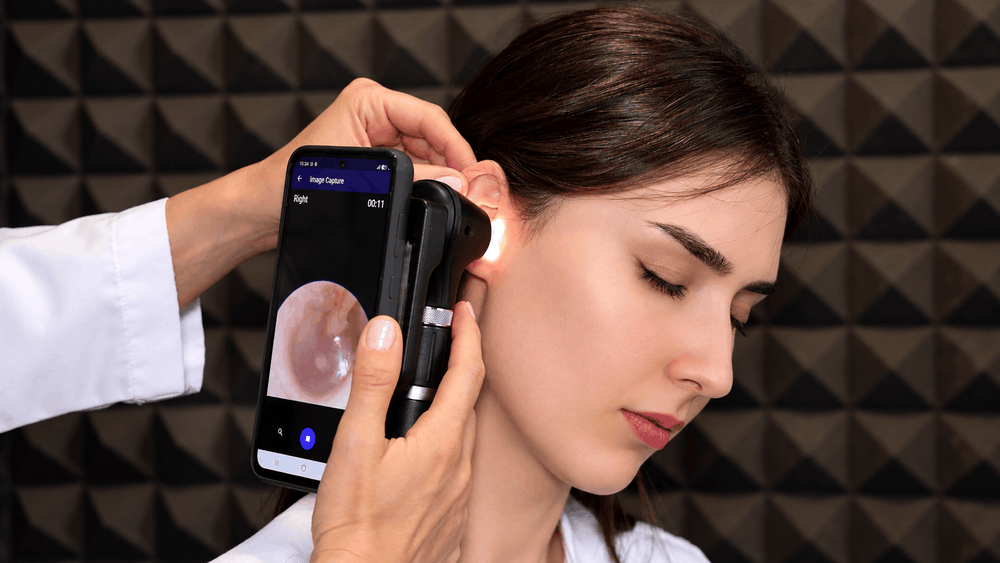
Hearing and balance disorders may be caused by diseases of the outer, middle, or inner ear, damage to the auditory nerve, as well as certain disorders of the central nervous system.
Modern audiological and otoneurological examinations make it possible to assess the function of different parts of the auditory and vestibular systems and more accurately determine the cause of a patient’s symptoms.
The service provides:
- Consultation with an audiologist-otoneurologist
- Examination of the external auditory canal and eardrum
- Otomicroscopy and video otomicroscopy
- Pure-tone audiometry
- Speech audiometry
- Tympanometry
- Acoustic reflex testing
- Otoacoustic emissions testing
- Auditory evoked potential testing
- Testing for hereditary hearing loss
- Clinical assessment of dizziness and balance disorders
- Positional and vestibular tests
- Functional assessment of the vestibular system
The scope of testing is determined individually based on the patient’s symptoms, medical history, and clinical examination findings.
What Does an Audiologist-Otoneurologist Diagnose and Treat?
Hearing Disorders
- Conductive hearing loss
- Sensorineural hearing loss
- Mixed hearing loss
- Age-related hearing loss
- Noise-induced hearing impairment
- Sudden hearing loss
- Unilateral or bilateral hearing loss
- Hereditary hearing loss
Tinnitus and Other Auditory Symptoms
- Tinnitus or ringing in the ears
- A feeling of fullness or pressure in the ear
- Ear pain and discharge
- Changes in sound perception
- Difficulty understanding speech, especially in noisy environments
- Hyperacusis, or increased sensitivity to sound
Dizziness and Balance Disorders
- Benign paroxysmal positional vertigo (BPPV)
- Ménière’s disease
- Vestibular neuritis
- Labyrinthine and other peripheral vestibular disorders
- Recurrent or persistent dizziness
- Unsteadiness while walking
- Balance disorders
- Differential diagnosis of peripheral and central causes of dizziness
When necessary, diagnosis and treatment may also be coordinated with a neurologist and other specialists.
When Should You See an Audiologist-Otoneurologist?
A consultation is recommended if you experience one or more of the following symptoms:
- Hearing loss: if you have started having difficulty understanding speech, often ask people to repeat themselves, or need to increase the volume of the television or other devices.
- Tinnitus or ringing in the ears: persistent or intermittent sounds may accompany a variety of auditory system disorders.
- Sudden hearing loss: a significant decrease in hearing that develops over several hours or days in one or both ears requires prompt medical assessment.
- Dizziness: a sensation that you or your surroundings are spinning may be related to a disorder of the vestibular system of the inner ear.
- Balance problems: unsteadiness while walking, veering to one side, or a feeling that you may fall should be evaluated to determine the underlying cause.
- Dizziness triggered by changes in position: brief episodes that occur when turning over in bed, lying down, standing up, or moving the head are commonly associated with positional vertigo.
- A feeling of fullness or pressure in the ear: particularly when accompanied by changes in hearing, tinnitus, or dizziness.
- Recurrent episodes of dizziness: especially when accompanied by nausea, fluctuating hearing, or tinnitus.
Early diagnosis is particularly important in cases of sudden hearing loss and acute vestibular disorders.
Conditions Diagnosed and Treated
- Sensorineural hearing loss
- Conductive hearing loss
- Mixed hearing loss
- Sudden hearing loss
- Age-related hearing loss
- Tinnitus
- Hereditary hearing loss
- Benign paroxysmal positional vertigo (BPPV)
- Ménière’s disease
- Vestibular neuritis
- Recurrent dizziness
- Balance and gait disorders
- Peripheral and central vestibular disorders
Frequently Asked Questions
Audiology mainly focuses on hearing assessment and the diagnosis of hearing disorders, while otoneurology focuses on dizziness, balance disorders, and diseases of the vestibular system. An audiologist-otoneurologist is an ENT specialist with additional expertise in the functional assessment of the ear. Because hearing and vestibular symptoms are often closely related, evaluating them together provides a more complete clinical picture.
Depending on the symptoms, testing may include otoscopic or microscopic examination, pure-tone and speech audiometry, tympanometry, acoustic reflex testing, otoacoustic emissions, and auditory evoked potential testing. The specialist determines which examinations are needed in each individual case.
The assessment begins with a detailed review of the patient’s symptoms and medical history. This is followed by evaluation of eye movements, balance, and vestibular reflexes, positional tests, and, when necessary, additional instrumental examinations.
No. Dizziness may be caused by disorders of the vestibular system of the inner ear, but it can also have neurological, cardiovascular, and other causes. One of the key goals of an otoneurological evaluation is to determine the most likely cause and origin of the dizziness.
If hearing decreases suddenly over several hours or days, especially in one ear, you should seek medical attention as soon as possible. Timely diagnosis and treatment can be important for the chances of hearing recovery.
Author:

Updated:
12 October 2026, 10:12Our certificates



List of services
- ▸ Audiology and Otoneurology
- ▸ Emergency Medical Aid
- ▸ Allergology
- ▸ Ophthalmology
- ▸ Anesthesia, Intensive Care, Resuscitation
- ▸ Gastroenterology and Endoscopy
- ▸ Gynecology and Women's Health
- ▸ Endocrinology
- ▸ Therapy
- ▸ Pulmonologist
- ▸ Pediatrics
- ▸ Dermatology
- ▸ Oncology and Chemotherapy
- ▸ Urology
- ▸ Rheumatology
- ▸ Dentistry
- ▸ Cardiology
- ▸ ENT and Audiology
- ▸ Rehabilitation medicine
- ▸ Proctology
- ▸ Pancreatitis Treatment
- ▸ Orthopedics Traumatology


