

Spleen Removal Surgery
Spleen removal surgery, or splenectomy, is a surgical procedure in which the spleen is removed completely or, in some cases, partially. The spleen plays a role in monitoring blood cells and protecting the body against certain infections, which is why it is removed only when there are clear medical indications.
Splenectomy may be necessary in cases of splenic injury and bleeding, certain hematological disorders, large cysts or tumors, significant enlargement of the spleen, and other conditions. Whenever possible, spleen-preserving treatment options are considered first.
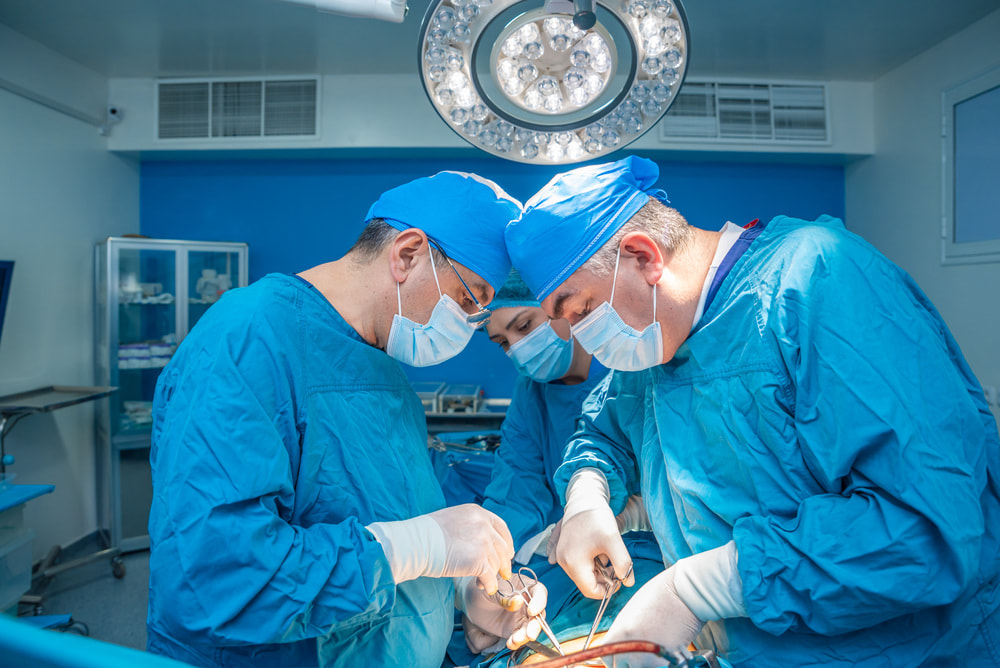
Splenectomy is the surgical removal of the spleen. It may be performed laparoscopically through several small incisions or as an open operation through a larger abdominal incision.
In some cases, it may be possible to remove only the affected part of the spleen or treat the underlying problem while preserving the organ.
Diseases of the spleen can present in different ways. An enlarged spleen is not a diagnosis by itself; its underlying cause needs to be identified. The same applies to a splenic cyst, tumor, or inflammatory changes: surgery is not required in every case.
When is spleen removal necessary?
Spleen removal may be indicated when preserving the organ is not possible or when the spleen itself poses a serious risk to the patient.
The main indications include:
- splenic rupture with ongoing internal bleeding,
- certain hematological disorders when other treatments have not been effective,
- significant symptomatic enlargement of the spleen,
- a large or complicated splenic cyst,
- certain benign or malignant tumors of the spleen,
- an abscess or severe infection that cannot be controlled by other methods,
- in some cases, the need to remove the spleen as part of surgery involving other organs.
In cases of trauma, spleen-preserving treatment is preferred whenever possible. In some stable patients, surgery can be avoided altogether or vascular embolization may be used.
Enlarged spleen: treatment without removal
Treatment of an enlarged spleen depends on the underlying cause. The fact that the spleen is enlarged does not usually constitute an indication for splenectomy by itself.
Possible causes include infections, certain liver and blood disorders, hematological conditions, and tumors. In such cases, the underlying disease is treated first and the size of the spleen is monitored.
The same approach applies to a splenic cyst and a splenic tumor: the need for intervention depends on the type of lesion, its size, location, growth, and the symptoms it causes.
What spleen removal options are used at Nairi Medical Center?
At Nairi Medical Center, surgical procedures for splenic disorders are performed within the General and Laparoscopic Surgery Service. Laparoscopic splenectomy is also available.
Laparoscopic splenectomy
During laparoscopic surgery, the surgeon makes several small incisions through which a camera and surgical instruments are inserted into the abdominal cavity. The spleen is separated from the surrounding tissues and blood vessels and then removed from the abdominal cavity.
In planned cases, the laparoscopic approach often allows for faster recovery than open surgery.
Open splenectomy
Open surgery may be necessary in cases of severe bleeding, a very large spleen, major trauma, or when a laparoscopic procedure would not be safe or technically feasible.
How is the surgery performed?
Splenectomy is performed under general anesthesia.
During laparoscopic surgery, several small incisions are made in the abdominal wall. Under camera guidance, the surgeon separates the spleen, seals or divides the blood vessels supplying it, and removes the organ.
In open surgery, access to the spleen is obtained through a larger abdominal incision.
The removed tissue may be sent for histological examination when necessary.
Preparing for splenectomy
Before a planned operation, the patient’s overall condition and the cause of the splenic disorder are assessed.
Tests may include:
- complete blood count and biochemical blood tests,
- blood coagulation tests,
- abdominal ultrasound, CT, or MRI, depending on the indication,
- preoperative assessment of the cardiovascular and respiratory systems.
After removal of the spleen, the risk of certain severe infections increases. For this reason, appropriate vaccination against pneumococcus, meningococcus, and Haemophilus influenzae type b is particularly important before an elective splenectomy. Whenever possible, these vaccines are administered at least 14 days before surgery.
Contraindications
If splenectomy is required to stop life-threatening bleeding, the operation may be performed as an emergency procedure with no alternative treatment option.
An elective procedure may be postponed, for example, in cases of active infection, uncorrected blood-clotting disorders, or a severe general condition, until the surgical risks can be reduced.
A very large spleen or extensive adhesions resulting from previous surgery are not always contraindications to surgery, but they may influence the choice between a laparoscopic and an open approach.
Recovery after spleen removal
Hospital stay after laparoscopic splenectomy is often shorter than after open surgery. Overall recovery after a laparoscopic procedure usually takes several weeks, while recovery after open surgery may take around 6 weeks.
During recovery, patients are generally advised to:
- gradually increase physical activity,
- avoid lifting heavy objects during the first weeks,
- avoid intensive exercise until the wound has healed,
- monitor the surgical wound,
- take prescribed medications and follow the recommended vaccination schedule.
Possible complications include bleeding, surgical or other infections, thrombosis, and injury to nearby organs. In the long term, the most important consideration is the increased risk of severe infections.
High fever or significant signs of infection after spleen removal should not be ignored, because some infections can progress rapidly in people without a spleen.
Diet after spleen removal
No special permanent diet is required after spleen removal. Food intake is gradually resumed after surgery, and patients can later follow a regular balanced diet.
Initially, it is advisable to eat small portions and choose easily digestible foods. Adequate intake of fluids, protein, vegetables, and fruit supports overall recovery.
Surgical treatment of splenic disorders at Nairi Medical Center
At Nairi Medical Center, surgical treatment of splenic disorders is provided within the General and Laparoscopic Surgery Service. Laparoscopic procedures, including splenectomy, are performed at the center.
At the same time, the possibility of preserving the spleen is assessed in each individual case. Spleen-preserving laparoscopic procedures have been performed at Nairi Medical Center, including surgery for a large splenic artery aneurysm without removing the spleen.
To book an appointment, call 89 00 or visit Nairi Medical Center at 21 Paronyan Street.
Frequently Asked Questions
In adults, the normal spleen length on ultrasound is usually up to 11–12 cm, with a width of around 7 cm and a thickness of 4–5 cm. The measurements may vary somewhat depending on height, sex, and body build.
Yes. In cases of an enlarged spleen, certain cysts, injuries, and vascular disorders, it may be possible to treat the underlying cause or perform a spleen-preserving procedure without removing the entire organ.
Pediatric splenectomy is not performed at Nairi Medical Center.
After spleen removal, it is possible to lead a normal, active life. However, the increased risk of severe infections remains lifelong. It is important to receive the recommended vaccinations and seek medical attention promptly in case of fever or signs of infection.
Author:

Updated:
27 October 2026, 08:36Our certificates



List of services
- ▸ Mammoplasty
- ▸ Liposuction
- ▸ Bariatric Surgery (Stomach Reduction)
- ▸ Glaucoma Treatment
- ▸ Strabismus Correction
- ▸ Venous system surgery, lymphology
- ▸ Vascular and Endovascular Surgery
- ▸ Aesthetic and plastic surgery
- ▸ General Surgery
- ▸ Thoracic Surgery
- ▸ Orthopedic oncology
- ▸ Head and neck surgery
- ▸ Spleen Removal Surgery
- ▸ Surgery for Benign Prostatic Hyperplasia
- ▸ Breast Augmentation
- ▸ Breast Reduction


