
Treadmill Test
A treadmill test is a functional cardiology examination used to assess cardiac performance under physical exertion. It may be indicated in cases of chest pain, shortness of breath, palpitations, dizziness, as well as when myocardial ischemia or exercise-induced arrhythmias are suspected.
At Nairi Medical Center, the treadmill test is performed while the patient walks on a treadmill under continuous monitoring of the electrocardiogram, heart rate, and blood pressure.
What is a treadmill test?
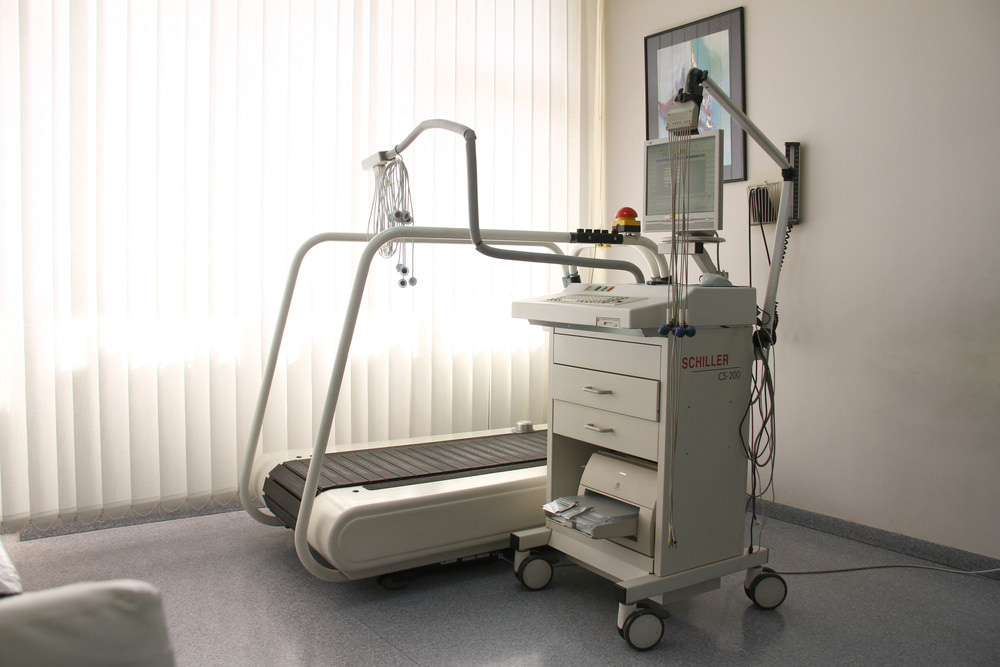
A treadmill test is a functional cardiac examination that assesses how the heart works during physical exercise. The test is performed while the patient walks on a moving treadmill, with continuous monitoring of the electrocardiogram, heart rate, blood pressure, and overall well-being.
This examination is used to assess impaired blood supply to the heart muscle, exercise-induced rhythm changes, and the body’s response to physical exertion.
What does the test show?
A treadmill test helps assess how the heart responds to gradually increasing physical activity. It may reveal signs of myocardial ischemia, exercise-induced arrhythmias, reduced exercise tolerance, as well as abnormal changes in blood pressure.
The test is often used in cases of chest pain, suspected coronary artery disease, heart rhythm disorders, and for evaluating the effectiveness of prescribed treatment.
Indications for the test
A treadmill test may be prescribed in the following cases:
- suspected ischemic heart disease;
- chest pain or discomfort during physical exertion;
- unexplained shortness of breath or rapid fatigue;
- heart rhythm disturbances associated with physical activity;
- hypertensive response during physical exertion;
- monitoring the effectiveness of treatment for cardiovascular diseases;
- preventive assessment before sports activities or in individuals with high levels of physical activity.
How is a treadmill test performed?
The patient then stands on the treadmill, ECG electrodes are attached, and the exercise phase begins. The level of exertion is gradually increased, while the doctor continuously monitors cardiac parameters and the patient’s well-being.
The test is stopped:
- when the predefined level of exertion is reached;
- if the patient develops symptoms;
- if potentially dangerous changes occur on the ECG or in blood pressure readings.
A treadmill test is safe and is performed under strictly controlled conditions.
How should you prepare for the test?
Before a treadmill test, it is usually recommended to:
- avoid heavy meals 2–3 hours before the test;
- avoid large amounts of coffee, energy drinks, or alcohol;
- wear comfortable clothing and shoes;
- inform the doctor in advance about any medications you are taking;
- bring previous ECGs, medical reports, or a cardiologist’s referral, if available.
In some cases, the doctor may recommend temporarily changing the schedule of certain medications, but this should only be done according to medical instructions.
Contraindications
A treadmill test is not performed or may be performed with limitations in certain conditions, including:
- early stage of acute myocardial infarction;
- unstable angina;
- severe arrhythmias;
- uncontrolled arterial hypertension;
- acute heart failure;
- severe aortic stenosis;
- acute myocarditis, pericarditis, or endocarditis;
- severe general condition or acute infectious diseases.
The appropriateness of the test is determined by the doctor in each individual case, taking into account the patient’s clinical condition and comorbidities.
Equipment
During a treadmill test, a treadmill, continuous ECG monitoring system, blood pressure monitoring equipment, and functional cardiac diagnostic software are used. This equipment allows changes in heart function to be recorded during the test and helps assess the body’s response to exercise.
Where can you undergo the test in Yerevan?
A treadmill test can be performed at Nairi Medical Center in Yerevan. The examination is carried out as part of functional cardiac diagnostics, using appropriate equipment and under medical supervision.
Frequently Asked Questions
The total duration of a treadmill test is usually about 20–40 minutes. This includes the preparation stage, the exercise phase itself, and a short observation period after the test. The actual walking phase is often shorter, but the final duration depends on the patient’s condition, the level of exertion, and the purpose of the examination.
In many cases, it is advisable to have a referral from a cardiologist or another doctor, as the test is prescribed according to specific indications. The referral usually includes the purpose of the examination and relevant clinical information, which helps interpret the results correctly. At the same time, administrative requirements may vary, so it is recommended to clarify the appointment procedure with the center in advance.
A treadmill test may also be performed in children, but not in all cases and only when medically indicated. In children, it is important to consider age, physical fitness, cardiac symptoms, and the purpose of the examination. The need for the test and its format are determined by a pediatric cardiologist or an appropriate specialist.
A positive treadmill test means that changes were recorded during exercise that may indicate myocardial ischemia or another cardiac problem. This is not a final diagnosis, but part of the clinical assessment. The result is interpreted together with the patient’s symptoms, ECG changes, blood pressure response, and overall condition.
A negative treadmill test usually means that no changes suggesting exercise-induced ischemia were recorded during the examination. However, this result should also be assessed together with the overall clinical picture. In some cases, even with a negative result, the doctor may recommend additional examinations if symptoms persist or the patient is at high risk.
The results of a treadmill test are usually interpreted by a functional diagnostics physician or a cardiologist. ECG changes, heart rate, blood pressure response, exercise tolerance, and any symptoms that occurred during the test are evaluated. The final clinical conclusion is made by comparing the test findings with the patient’s medical history and the results of other examinations.
Both examinations are cardiac stress tests, but they differ in the way they are performed. A treadmill test is performed while walking on a treadmill, while bicycle ergometry is performed on a bicycle-like device. Both methods assess heart function under exercise conditions, but the choice of equipment depends on the clinical question, the patient’s physical abilities, and the technical capabilities of the center.
On the day of the test, it is advisable to bring an identification document, a referral if available, as well as previous ECG results, cardiology reports, or other important examination results. It is recommended to wear comfortable clothing and sports or soft shoes. If you take regular medications, it is also useful to have a list of them or your prescriptions with you.
Author:
Updated:
17 June 2026, 10:00Our certificates



List of services
- ▸ Treadmill Test
- ▸ Cardiac Holter Monitoring
- ▸ ECG (Electrocardiography)
- ▸ Cystoscopy
- ▸ Colposcopy
- ▸ Surgery for intervertebral hernia removal
- ▸ Surgical Treatment of Parkinson's Disease
- ▸ Maxillofacial Surgery
- ▸ Tumors of the digestive system
- ▸ Tumors of the nervous system
- ▸ Breast tumors
- ▸ Tumors of the respiratory system
- ▸ Hysteroscopy
- ▸ Bronchoscopy
- ▸ Colonoscopy
- ▸ Գաստրոսկոպիա
- ▸ General Surgery


