

Գաստրոսկոպիա
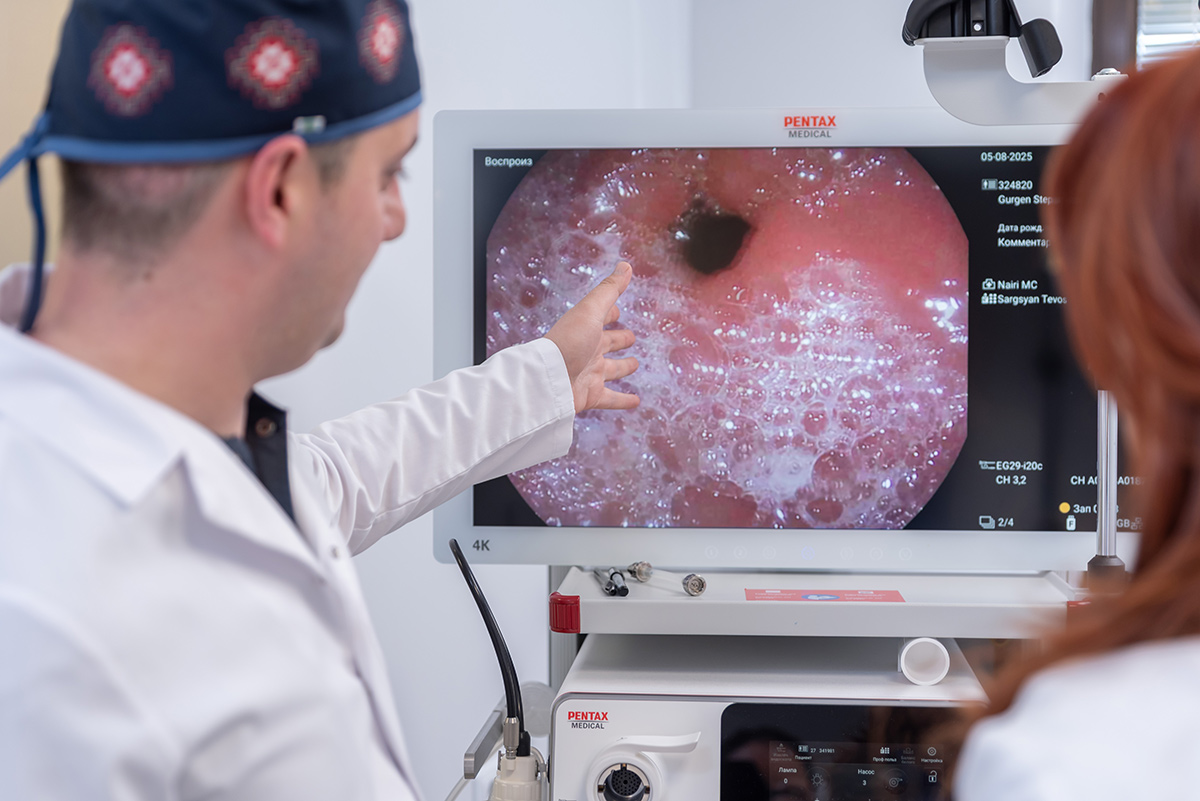
Gastroscopy is an endoscopic examination during which the physician evaluates the condition of the mucous membrane of the esophagus, stomach, duodenum, and its descending part. It helps detect inflammatory, ulcerative, erosive, bleeding, tumorous, and other changes and, when necessary, allows a tissue sample to be taken for further examination.
Gastroscopy may be recommended in cases of heartburn, nausea, upper abdominal pain, vomiting, anemia, suspected gastrointestinal bleeding, difficulty swallowing, weight loss, and other complaints. At Nairi Medical Center, gastroscopy is performed according to clinical indications.
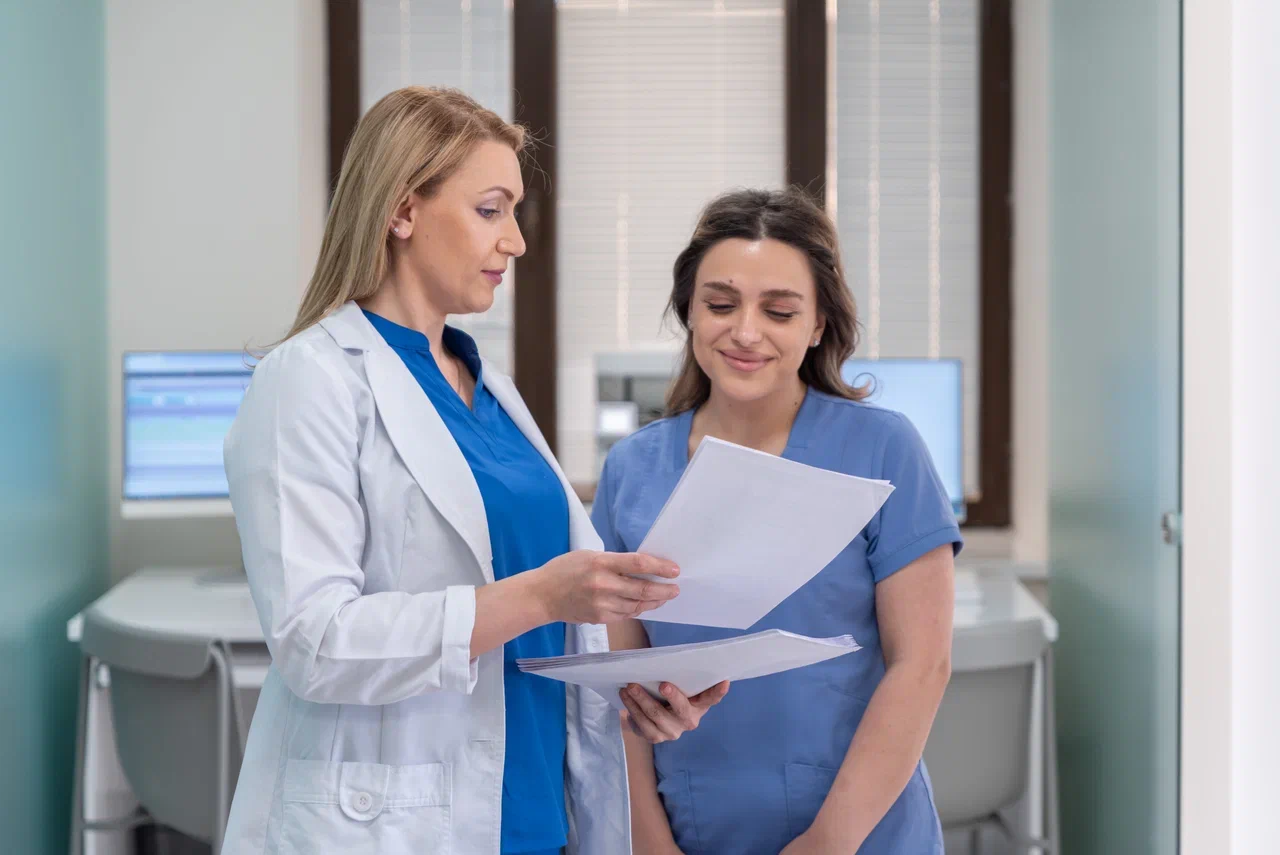
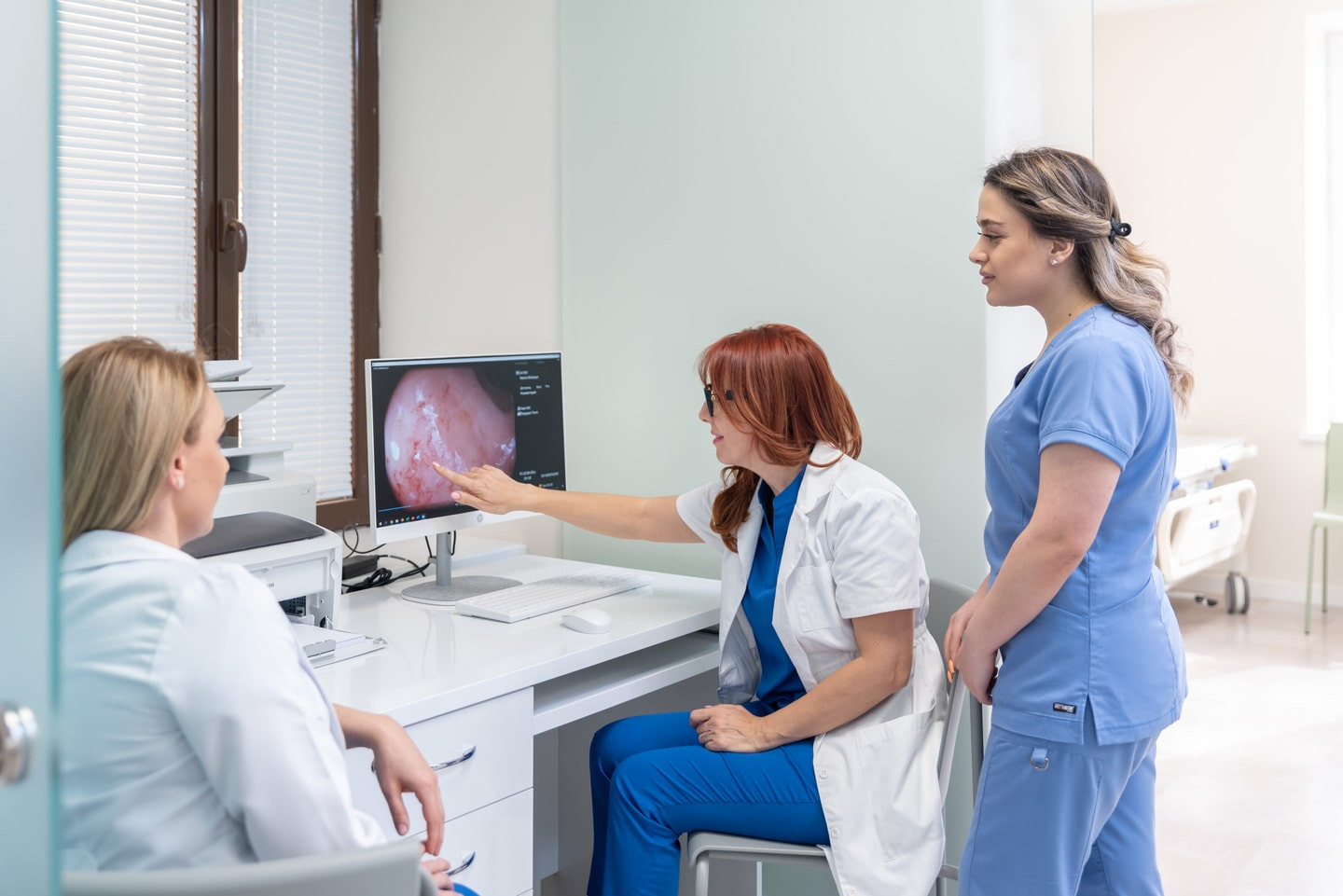
Gastroscopy (or video gastroduodenoscopy) is one of the most reliable methods for examining the mucous membrane of the upper digestive tract: the esophagus, stomach, duodenum, and its descending part. This procedure helps detect various pathological conditions — from inflammation and ulcers to tumors.
Why is gastroscopy performed?
Gastroscopy helps diagnose:
- Inflammation of the stomach and duodenal mucosa
- Peptic ulcers
- Identification and stopping of bleeding sources
- Signs of mucosal atrophy
- Benign and malignant formations
It is essential for clarifying the cause of stomach pain, persistent heartburn, vomiting, loss of appetite, or reduced hemoglobin levels.
When is gastroscopy indicated?
Gastroscopy is recommended for:
- Stomach and upper abdominal pain
- Unexplained weight loss
- Early satiety, loss of appetite
- Vomiting, heartburn, sour taste in the mouth
- Presence of blood in vomit
- Bloating, anemia
Apart from diagnostics, gastroscopy is often performed for therapeutic purposes.
How to prepare for gastroscopy
To ensure accurate results:
- Do not eat for 12 hours before the procedure
- On the day of the test, avoid any food and liquids
- If you take medications regularly, consult your doctor about taking them
You must arrive with an empty stomach.
How is gastroscopy performed?
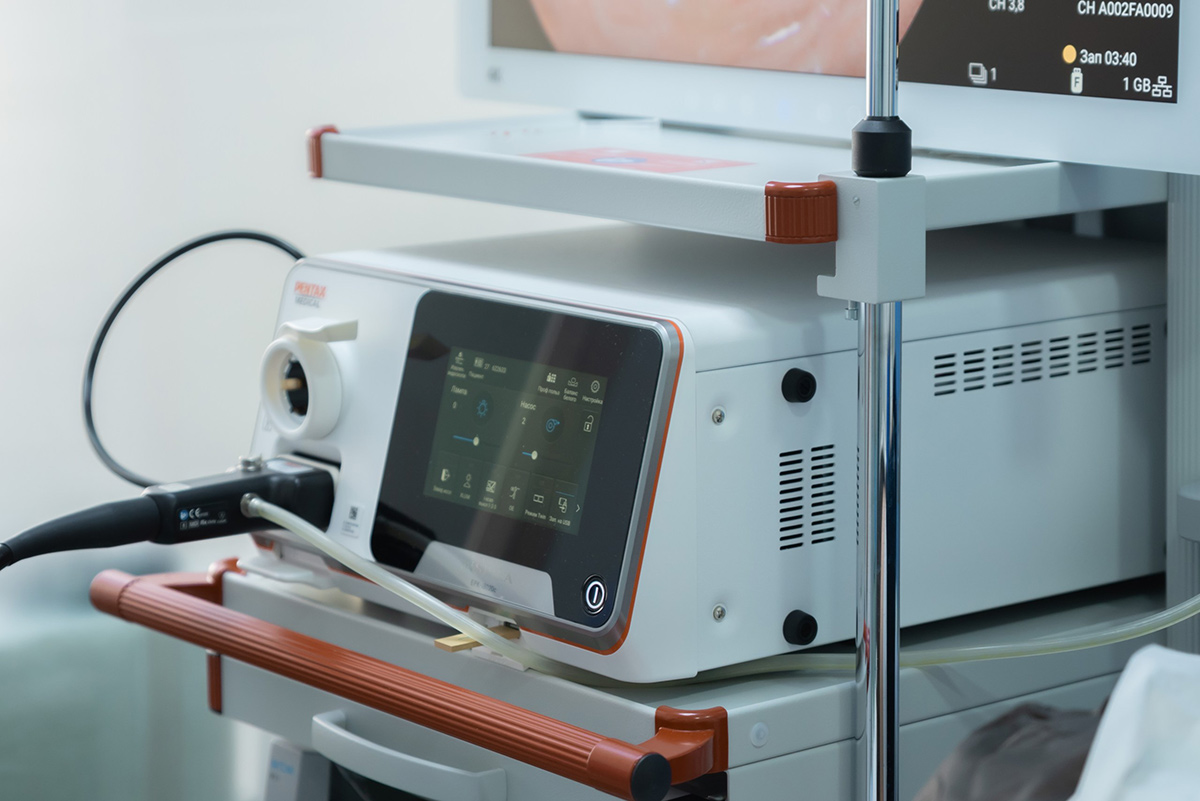
The procedure is performed using a thin tube (gastroscope) with a light and camera, allowing the doctor to view the mucosa.
Duration: 5–10 minutes. Biopsy may be performed if necessary.
Gastroscopy allows:
- Detection of inflammation or ulcerative changes
- Confirmation of Helicobacter pylori infection
- Assessment of tumor characteristics
- Monitoring of treatment progress and effectiveness
- Therapeutic actions (stopping bleeding, removing formations, stenting, intragastric balloon placement)
Gastroscopy with sedation
Many patients prefer gastroscopy under sedation for greater comfort. During sedation, the patient is in deep sleep and feels no discomfort. The procedure is carried out under the supervision of an experienced anesthesiologist, ensuring complete safety.
Where to have gastroscopy in Yerevan
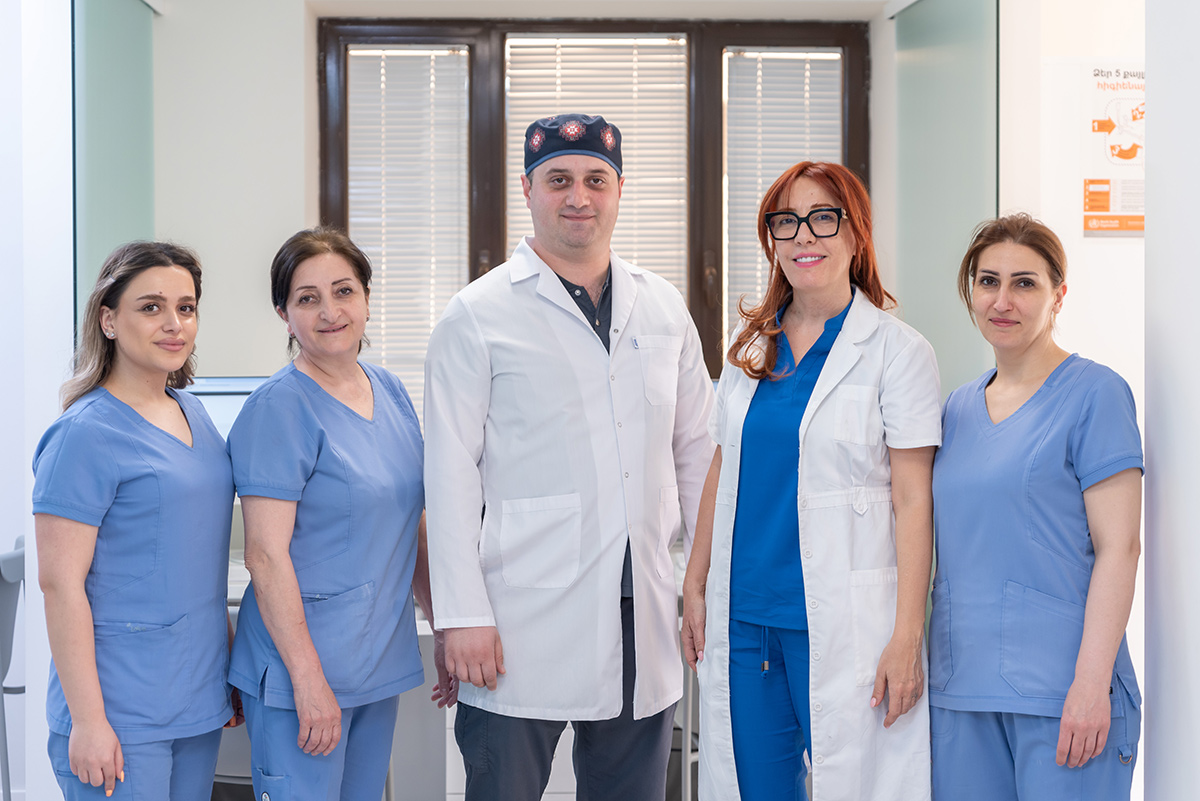
You can undergo gastroscopy at Nairi Medical Center. The procedure is performed using advanced equipment by experienced endoscopists, either with local anesthesia or sedation.
To make an appointment, call 89 00 or visit us at 21 Paronyan St.

Frequently Asked Questions
Before gastroscopy, it is necessary to follow the preparation instructions given by the physician. The examination is usually performed on an empty stomach so that the mucosa can be assessed accurately. If the patient regularly takes medication or has coexisting medical conditions, the doctor should be informed in advance.
Gastroscopy usually takes about 5 to 10 minutes. However, the overall visit may take longer, as it includes preparation, a preliminary discussion with the physician, and, if necessary, short observation after the examination. If a biopsy or another additional intervention is performed, the procedure may take a little longer.
Gastroscopy may be performed under local anesthesia; however, for greater diagnostic value and maximum patient comfort, it is often carried out under sedation. The approach is chosen individually depending on the patient’s condition, coexisting diseases, and the purpose of the examination. The most appropriate option in each case is determined by the physician.
Yes, in some cases gastroscopy is performed without general anesthesia. Often, only local anesthesia of the throat is used, which helps make the examination more tolerable. The exact format of the procedure is determined individually for each patient.
The need for the examination, its format, and the conditions under which it is performed are determined based on the child’s age, symptoms, and overall clinical situation. The possibility and conditions of performing gastroscopy in children should be clarified with the medical center in advance.
Whether drinking is allowed before gastroscopy depends on the timing of the examination and the preparation rules. In many cases, it is recommended not to drink anything for a certain period beforehand so that the stomach remains empty. Usually, food should be avoided for 12 hours and liquids for 4–5 hours before the procedure.
Usually, before gastroscopy it is recommended to stop eating 12 hours before the examination and stop drinking water 4 hours beforehand so that the procedure is performed on an empty stomach.
After gastroscopy, the restrictions that follow depend on whether only local anesthesia was used or sedation as well. In many cases, the patient can return to normal daily activities shortly afterward, but driving is restricted for several hours.
Gastroscopy usually does not cause severe pain, but it may be associated with unpleasant sensations. During the examination, there may be throat discomfort, a foreign body sensation, or a gag reflex. These sensations vary from person to person, which is why it is often preferable to perform the examination under intravenous anesthesia.
Yes, in some cases it is possible to perform both gastroscopy and colonoscopy at the same time. This approach may be advisable when different parts of the digestive system need to be evaluated during a single visit.
The frequency of gastroscopy is determined by medical indications. It may be repeated if symptoms persist, for monitoring previously detected changes, for follow-up, or for evaluating treatment results. There is no strict universal limitation on how often it can be performed.
Yes, when indicated, a biopsy can be performed during gastroscopy. This means that a small tissue sample is taken from the mucosa for further histological examination. This helps determine the nature of the detected changes more accurately.
During pregnancy, gastroscopy is performed only when there are clear medical indications for it. The advisability of the examination is determined individually, taking into account the stage of pregnancy, the nature of the complaints, and the overall clinical condition. The decision is made by the physician after weighing the expected benefits against the possible risks.
Author:
Updated:
02 October 2025, 10:59Our certificates



List of services
- ▸ Treadmill Test
- ▸ Cardiac Holter Monitoring
- ▸ ECG (Electrocardiography)
- ▸ Cystoscopy
- ▸ Colposcopy
- ▸ Surgery for intervertebral hernia removal
- ▸ Surgical Treatment of Parkinson's Disease
- ▸ Maxillofacial Surgery
- ▸ Tumors of the digestive system
- ▸ Tumors of the nervous system
- ▸ Breast tumors
- ▸ Tumors of the respiratory system
- ▸ Hysteroscopy
- ▸ Bronchoscopy
- ▸ Colonoscopy
- ▸ Գաստրոսկոպիա
- ▸ General Surgery


